
#phrases
On the two present tenses of ‘bí’
Learn a bit of Irish every day.
Subscribe to free e-mails.
Your e-mail address is safe with us.
We have a strict personal data policy.
The Irish verb for to be, which you will find listed in dictionaries as bí, is quite exceptional in that it has not one but two present tenses: a "normal" present tense (tá) and a continuous present tense (bíonn). They have slightly different meanings: tá means "is right now", while bíonn could be rephrased as "is regularly, usually or repeatedly". A couple of examples will illustrate the difference:
Tá sé anseo. He is here. Bíonn sé anseo gach Aoine. He is here every Friday.
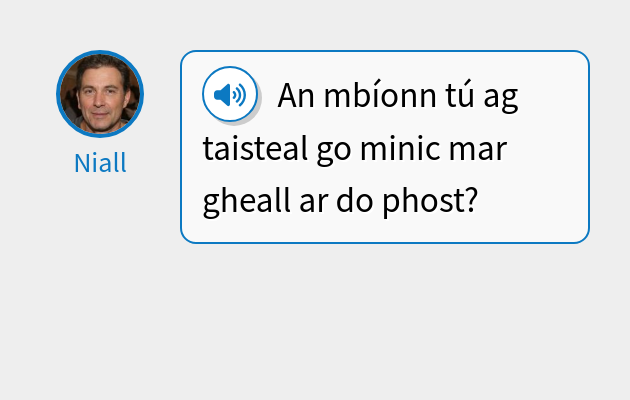
An bhfuil tú tuirseach? Are you tired? An mbíonn tú tuirseach tráthnóna? Are you usually tired in the evening?
Níl sí sásta. She is not happy. Ní bhíonn sí sásta riamh. She is never happy.
The verb bí is the only verb in Irish that has two present tenses. All other verbs only have the continuous presente tense:
Labhraíonn sí go mall. She (usually) speaks slowly. Siúlann sé gach lá. He walks every .day
If you want to express the idea that something is happening "right now", you must take the verb's verbal noun and use in combination with the verb tá is:
Tá sí ag labhairt go mall. She is speaking slowly. Tá sé ag siúl. He is walking.
And, just for fun, you can change tá to bíonn to flip the whole thing into a "continuous" meaning again:
Bíonn sí ag labhairt go mall. She is (usually) speaking slowly. Bíonn sé ag siúl gach lá. He is walking every day.